
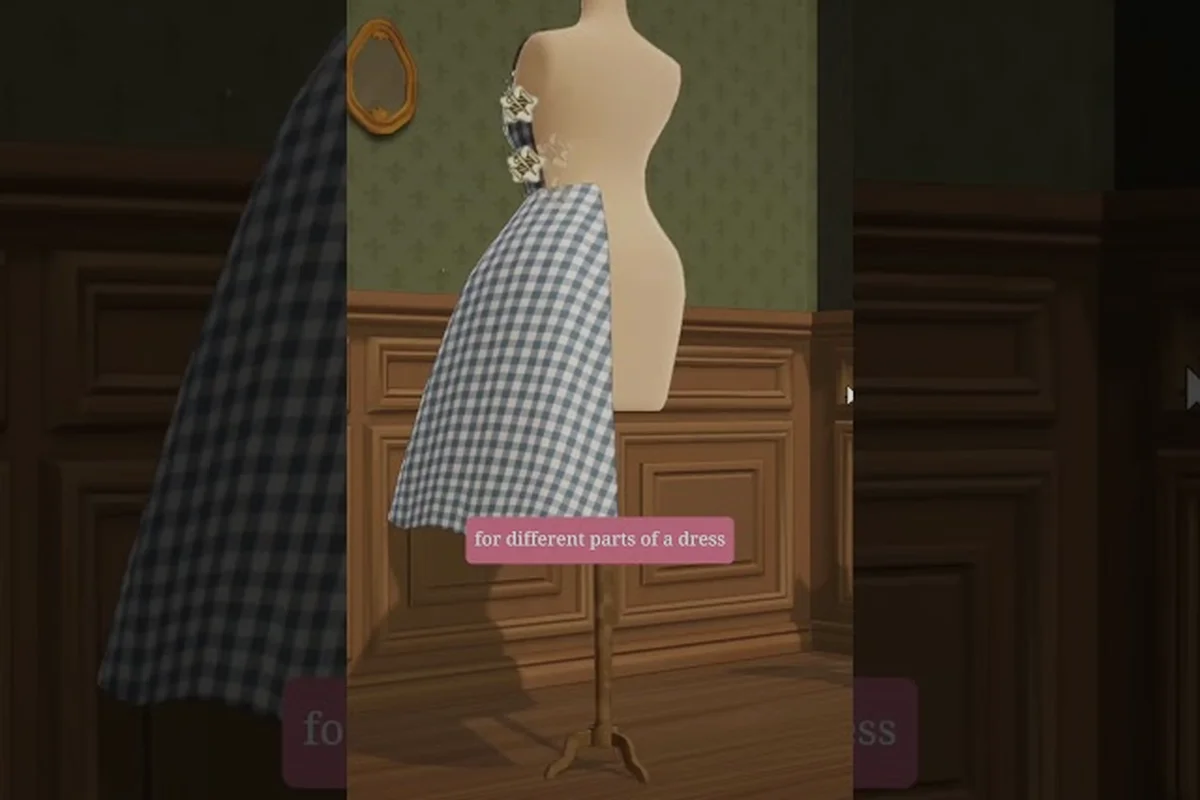
A bias cut changes everything about how a panel falls on the mannequin, and in Dressmaker that single shift in grain direction is the difference between a satisfied customer and a rejected commission. Cutting along the diagonal — true to the 45-degree angle that runs between the warp and weft threads — unlocks a fluid drape that straight-grain panels simply cannot match, which is why the technique shows up again and again in the requests that land in your sketchbook.
The dressmaker bias cut fabric mechanic interacts directly with the fabric swatch you choose, because the same diagonal behaves differently on lightweight cotton than it does on heavy velvet. Understanding that interaction early lets you plan commissions around the silhouette you want before you ever feed the panel through the sewing machine, and the Dressmaker on Steam page confirms that the full design loop — from fabric samples through mannequin preview — is the intended workflow for this technique.
What Bias Cut Fabric Does to Drape on the Mannequin
Cutting on the bias stretches the weave's natural give, which means the panel behaves more like a soft ribbon than a structured sheet. On the mannequin preview, you will see the hem flare outward, the side seams relax, and the neckline curve more gently against the form. The effect is most visible on fitted bodices, where a bias-cut panel smooths over the bust and hip transitions without pulling or buckling.
The catch is that bias-cut fabric loses the directional stability that straight-grain panels rely on. A cotton panel cut on the diagonal will stretch out of shape during sewing if you tug it, while a wool panel cut on the diagonal holds memory and bounces back. According to the official store description, the five named base fabrics — cotton, linen, wool, silk, and velvet — each respond to bias cutting with a distinct silhouette, so the swatch you pick from the sketchbook sets the entire visual outcome of the commission.
Grain Direction and the 45-Degree Line
Grain direction is set when you first place the paper pattern on the fabric sample. The grain line indicator on each pattern piece snaps to the warp by default, but rotating the pattern 45 degrees shifts the cut onto the true bias. Most patterns in the sketchbook will let you do this rotation freely, while a handful of specialty templates lock the grain to prevent mistakes on structured pieces like jackets.
When you rotate a bodice piece to the bias, the front and back panels mirror each other across the center front, which creates that classic cowl-neck drape that bias cutting is known for. Skirt panels on the bias swing outward instead of hanging straight, and sleeve caps cut on the diagonal sit higher on the shoulder because the bias stretches to accommodate the armhole curve without gathering.
Why Some Fabrics Reward Bias Cutting More Than Others
Lightweight fabrics with a loose weave — silk in particular — reward bias cutting the most, because the diagonal exposes more thread surface and lets the panel flow freely. Heavyweight fabrics like wool and velvet still benefit, but the drape reads as sculptural rather than fluid. Cotton sits in the middle: bias-cut cotton has a soft, casual swing that works well for everyday dresses, while bias-cut wool reads closer to a tailored cocoon.
The table below shows how each base fabric behaves when cut on the bias and previewed on the mannequin, based on community testing reported across the early-access launch window.
| Fabric | Bias Drape Quality | Best Use Case | Difficulty to Sew |
|---|---|---|---|
| Cotton | Soft swing, casual flare | Summer day dresses | Beginner |
| Linen | Crisp fluid drape, holds shape | Brunch and garden occasions | Beginner |
| Wool | Sculptural cocoon, structured | Winter coats and wraps | Intermediate |
| Silk | Liquid flow, cowl necks | Evening gowns and royal commissions | Advanced |
| Velvet | Heavy ripple, luxe surface | Formal winter events | Advanced |
Reading Fabric Types for the Right Customer
Every customer who walks into the shop carries an occasion on their social calendar, and the dressmaker which fabric for which customer question is really a question about matching drape to event tone. A summer garden party calls for breathable cotton or linen, because the customer will be moving outdoors in warm light, and a heavy velvet panel would feel costume-like in that setting. A royal ball commission is the opposite — silk and velvet are the only two fabrics that read as formal enough to satisfy the request, and bias cutting amplifies their elegance.
The official Free Lives press kit confirms that commissions range from simple summer dresses up to extravagant royal gowns, which means the fabric type decision scales directly with the customer's status and the event weight. Matching the swatch to the occasion before you cut a single panel saves you from a rejection when the mannequin preview reveals a silhouette that does not fit the event.
Occasion Mapping Cheat Sheet
| Occasion Tier | Recommended Fabrics | Bias Cut Value | Customer Mood |
|---|---|---|---|
| Casual errand | Cotton, linen | Low — straight grain works | Relaxed, quick turnaround |
| Garden party | Linen, lightweight cotton | Medium — flare on hem | Bright, social |
| Office or town hall | Wool, cotton blend | Low — structured look | Professional, conservative |
| Wedding guest | Silk, velvet | High — fluid movement | Celebratory, polished |
| Royal commission | Silk, velvet, premium accents | Maximum — full drape | Demanding, formal |
Matching Swatch Color to Commission Mood
Fabric type alone is not enough — the color you pick from the dressmaker fabric swatches palette sets the emotional read of the finished piece. A silk panel in jewel tones reads as regal and suits evening commissions, while the same silk in pastel reads as romantic and works for daytime events. Wool in deep neutrals feels grounded and serious, which is why structured coats default to those shades.
The sketchbook fabric samples are organized by color family first and by fabric type second, so when you flip through them, you see the full color range for cotton before the page even introduces wool. This layout makes it easier to compare drape across swatches in the same shade, which is the fastest way to judge whether the customer wants the structured read of wool or the fluid read of silk in a given color.
Building Out the Sketchbook and Swatch Library
The dressmaker fabric samples sketchbook is the hub where you plan every commission, and building out a deep swatch library early gives you more flexibility when high-tier customers arrive. Every commission you complete drops a small number of new swatches into the sketchbook, and rare commissions occasionally unlock limited-edition colorways that only appear in the premium tier of the fabric shop. Tracking which swatches you have and which you still need is part of the long-game planning that separates a busy shop from a struggling one.
You can see this loop described in the Dressmaker Steam community guides hub, where early players share which commissions unlocked which swatches. According to community data reported by players, the limited-edition colorways tend to drop from royal commissions and from sabotage-resolved events, so chasing those commissions directly is the fastest path to filling out the rare end of your library.
Swatch Library Growth Benchmarks
| Shop Level | Expected Swatch Count | Fabric Types Unlocked |
|---|---|---|
| Beginner (Days 1–5) | 8–12 swatches | Cotton, linen |
| Intermediate (Days 6–15) | 20–30 swatches | Cotton, linen, wool |
| Advanced (Days 16+) | 40+ swatches | All five base types |
| Premium tier | 50+ swatches | Base types + rare colorways |
Swatch Comparison on the Mannequin
Before you commit to cutting, drape two swatch samples side by side on the mannequin preview. The preview renders both fabrics in the chosen color and at the chosen grain direction, which lets you see the silhouette difference in real time without wasting a panel of premium fabric. This is the cheapest way to verify that the bias cut on silk will give you the cowl you wanted, instead of finding out at the sewing machine that the drape was wrong.
A good rule of thumb: if the mannequin preview shows pooling at the hem, the bias cut is too aggressive for the fabric weight and you should rotate the pattern back toward the straight grain. If the preview shows the hem swinging too stiff, you need a lighter fabric or a true 45-degree bias instead of a near-bias rotation. The preview is the dressmaker cheap fabric guide in action, because it saves the expensive swatch for the cut that actually works.
Premium Versus Budget Fabric Strategy
The dressmaker premium fabrics in the shop cost more per panel, but they unlock silhouettes that budget fabrics cannot reach. Silk in particular is the single most expensive base fabric, and the premium colorways on top of that price push a single panel into the top tier of the shop's daily budget. The reward is a drape that is unmatched, which is why royal commissions specifically request premium silk or velvet and refuse to accept the base tier.
The dressmaker cheap fabric guide side of the same shop is where cotton and linen live, and these are the workhorse fabrics that keep the shop running between premium commissions. Cotton handles casual day commissions cheaply, so you can clear those requests quickly and bank the income for the silk panel you will need later in the week. According to community testing, mixing two cotton panels and one silk panel per day is the most efficient ratio for steady income growth.
Fabric Price-to-Outcome Comparison
| Fabric | Approx. Shop Price | Customer Acceptance Rate | Best Tier |
|---|---|---|---|
| Cotton | Low | High for casual requests | Budget |
| Linen | Low–Medium | High for daytime events | Budget |
| Wool | Medium | Moderate across tiers | Mid |
| Velvet | High | High for formal requests | Premium |
| Silk | Very High | Highest for royal requests | Premium |
When to Spend and When to Save
Spend premium fabric when the commission reward is at least three times the panel cost, which is the break-even point most players use according to community data. Save budget fabric for the commissions that explicitly mark cotton or linen as the requested material, because those customers will reject silk as overkill even though silk technically offers better drape. A common mistake is to over-invest in a commission that pays the same regardless of fabric, which burns your premium swatch stock for no extra return.
The balance you want is a sketchbook that has both a deep premium swatch library for the rare high-paying commissions and a rotating stock of cotton and linen for the daily walk-ins. A deeper breakdown of how fabric pricing ties into commission rewards is covered in the dressmaker difficulty guide, which walks through the unlock curve for premium materials as your shop levels up.
Working the Bias Cut Into a Commission Workflow
A reliable commission flow starts with the customer request, moves through swatch selection in the sketchbook, then locks the pattern rotation, and only after all three of those steps line up do you cut the panel. Skipping straight to the cutting step is the most common cause of wasted premium fabric, because the swatch you picked might not support the bias rotation the pattern requires. The dressmaker grain vs bias guide framework — covered in detail in the grain vs bias guide — is the cleanest way to think about that decision tree before you commit.
Step 1 is to read the commission card carefully, because the request will usually name a fabric preference and an occasion. Step 2 is to open the fabric samples in the sketchbook and compare at least two swatches in the requested color family. Step 3 is to drop the pattern onto the chosen swatch and rotate to the bias if the silhouette needs the fluid drape. Step 4 is to preview on the mannequin and confirm the hem behavior. Step 5 is to cut, sew, and decorate.
Bias Cut Decision Flow
| Customer Request | Recommended Grain | Why |
|---|---|---|
| Casual cotton day dress | Straight grain | Bias would over-drape for the occasion |
| Evening silk gown | True 45-degree bias | Liquid drape is the whole point |
| Winter wool coat | Near-bias (20–30 degrees) | Holds shape with slight stretch |
| Velvet formal wrap | True bias | Heavy ripple on velvet reads as luxe |
| Linen garden dress | Light bias rotation | Casual flare without losing structure |
Common Mistakes to Avoid
The most frequent mistake is sewing a bias-cut panel under tension, which stretches the threads out of alignment and leaves a wavy seam that the customer will notice immediately. Bias-cut fabric wants to relax on the sewing machine, so feed it through with a light touch and let the presser foot do the work. The second most common mistake is using a too-heavy thread on a bias-cut silk panel, because thick thread puckers the lightweight fabric and ruins the smooth drape that justifies the bias cut in the first place.
A third mistake, often reported by players in the early access community, is assuming that bias cutting is always the right answer. Some commissions specifically request the structured look of straight grain, and forcing a bias rotation on a pattern that was designed for stability will produce a silhouette the customer did not ask for. The grain-vs-bias decision is a tool, not a default, and the right answer depends on the fabric, the occasion, and the customer's mood.
For a broader look at how fabric selection ties into the full commission loop — including how customer mood changes the optimal swatch — the pattern layout guide walks through the workflow from request to mannequin preview in a single connected read.
Frequently Asked Questions
What is a bias cut in Dressmaker?
A bias cut is when you rotate a pattern piece 45 degrees off the warp and weft threads before cutting the fabric, which exposes the diagonal grain and unlocks a fluid drape that straight-grain panels cannot match. The mechanic shows up most clearly on silk and velvet, where the diagonal gives the panel a liquid or sculpted fall on the mannequin preview. Cutting on the bias also reduces the panel's directional stability, so the fabric stretches during sewing and needs a light hand on the machine.
Which fabric is best for bias cutting a royal commission?
Silk is the strongest choice for a royal commission on the bias, because the lightweight weave gives the deepest drape and the cowl-neck fall that formal requests typically want. Velvet is the close runner-up when the customer wants a heavier silhouette, and it reads as luxurious at winter events where silk would feel too light. The premium tier of both fabrics adds limited-edition colorways that boost customer mood even further.
How do I unlock more fabric swatches in the sketchbook?
Every completed commission drops new swatches into the dressmaker fabric samples sketchbook, and rare commissions occasionally drop limited-edition colorways. Royal commissions and sabotage-resolved events are the most reliable source of premium swatches, while standard daily commissions fill out the cotton and linen end of the library. Working through the full commission queue steadily is faster than trying to chase specific swatches, because the drops are weighted across all fabric types.
Is there a cheap fabric that still looks good on the bias?
Linen is the strongest budget option for bias cutting, because the natural fiber holds a crisp drape without the puckering that cotton shows on a true 45-degree rotation. A bias-cut linen dress reads as polished enough for garden parties and casual weddings, which is a tier above what cotton can carry on the same grain rotation. The dressmaker cheap fabric guide approach is to use linen for the bias and reserve cotton for straight-grain casual pieces, which keeps the budget manageable while preserving drape quality on the commissions that need it.
Does bias cutting affect the final dress price?
The cut itself does not change the sale price directly, but the silhouette it produces changes which customer tier will accept the commission, and that tier sets the payout. A bias-cut silk gown satisfies royal-tier customers at a higher rate than the same silk cut on the straight grain, which means more successful commissions and more income per week. A bias-cut cotton dress rarely beats the straight-grain version for casual requests, so the value of the rotation depends entirely on the customer tier you are targeting.