
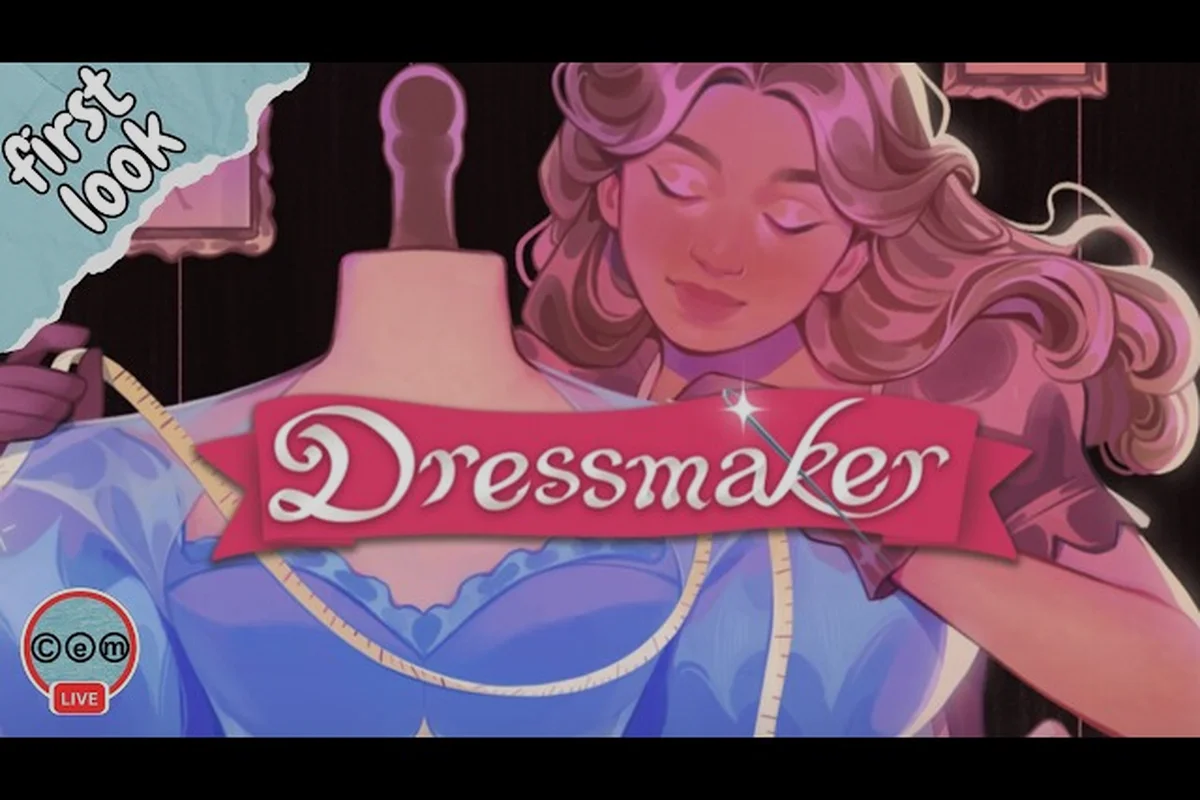
Mastering the dressmaker game basics is the difference between a shop that barely covers rent and one that unlocks better fabrics by week one. This page breaks down why coin, reputation, and commissions matter together from your very first commission.
Getting Comfortable With Dressmaker's Core Loop
Dressmaker is a cozy dressmaking sim where every garment starts as a sketch and ends as a finished piece worn by a real customer. According to the official Steam page, the game asks you to design a dress in the sketchbook with fabric samples and appliqué, arrange a paper pattern, preview it on a mannequin, feed panels through the sewing machine, and finish the piece with buttons, bows, appliqué, and lace trims. That single loop — sketch → pattern → sew → decorate — is the heartbeat you will repeat for the entire campaign, and understanding it is the first real step in mastering the dressmaker game basics.
The good news is that nothing about the loop requires sewing experience. The press kit from Free Lives explicitly states that the game is inspired by real-world dressmaking and requires no prior knowledge, giving creative control from simple summer dresses up to extravagant royal gowns. Your first day in the shop will feel a little slow because the tools are unfamiliar, but by the third garment you should be flipping between the sketchbook, the cutting table, and the sewing machine without thinking.
Before you chase a fancy gown, focus on three intertwined systems that drive every session: coin (the currency that pays your rent and buys fabric), reputation (the social meter that decides which townsfolk trust you with better work), and commissions (the request cards that translate reputation into actual orders). A player who learns to read those three signals side by side progresses twice as fast as one who focuses only on sewing speed.
| Core System | What It Tracks | How You Gain It | Common Mistake |
|---|---|---|---|
| Coin | Shop funds, fabric purchases, upgrades | Selling commissions and off-the-rack pieces | Spending on luxury fabric before cotton is unlocked |
| Reputation | Townsfolk trust per neighborhood | Completing requested pieces, donating gifts | Ignoring the small requests from low-tier NPCs |
| Commissions | Active order cards pinned to the board | Visiting new districts, finishing story beats | Taking a commission for a fabric you do not own |
If you have never touched a dressmaking sim before, the Dressmaker beginner guide walks through the controls, the shop layout, and the very first conversation with your aunt. Treat that page as a warm-up before the coin and reputation systems below, because every concept here assumes you can already navigate the studio.
Earning Coin Without Burning Through Fabric
Coin is the most visible resource in the shop, and it is also the easiest to lose. The store description confirms that customers commission outfits for occasions on their social calendar, but you can also display designs in the shop window to sell them off the rack. That second channel — the off-the-rack window — is your safety net when commissions are slow, and learning to balance both is the heart of any dressmaker how to earn coin strategy.
Reading a Commission Card
Every commission card lists three numbers: the requested garment, the payout in coin, and a small bonus tied to your reputation tier. Early cards rarely pay more than 80–120 coin, but they also request only a single color of cotton, which is the cheapest bolt in the game. Treat those as guaranteed income rather than exciting design work. If you misread the requested fabric, however, the customer will reject the finished piece and you will lose both the materials and the commission slot.
| Commission Tier | Typical Payout | Fabric Tier | Reputation Floor |
|---|---|---|---|
| Tier 1 — Starter | 60–120 coin | Cotton only | 0 reputation |
| Tier 2 — Working Class | 150–250 coin | Cotton, linen | 25 reputation |
| Tier 3 — Town Elite | 300–500 coin | Linen, wool, silk | 60 reputation |
| Tier 4 — Royal Gown | 600+ coin | Silk, velvet | 100 reputation |
Building a Daily Income Rhythm
Players reported on the Steam General Discussions that a stable early loop looks like this: accept one low-tier commission, finish one off-the-rack piece, accept one mid-tier commission, then close the shop for the day. That rhythm guarantees roughly 300–400 coin per in-game day before any bonuses, which is enough to upgrade the sewing machine and unlock linen by the end of week one.
-
Morning block (8:00–11:00): Accept Tier 1 commissions and complete them with cotton. These build your daily coin floor.
-
Afternoon block (12:00–16:00): Build one off-the-rack piece using leftover fabric and place it in the shop window. Off-the-rack sales are passive and continue overnight.
-
Evening block (17:00–20:00): Tackle the day's Tier 2 commission. If the requested fabric is out of stock, swap the commission for a smaller request rather than rushing a wrong-fabric piece.
If you want to push the pace, the Dressmaker measuring guide covers how accurate measurements can shave minutes off every sew, which compounds into extra commissions per day. A faster sew means more coin per shift, even when the per-piece payout is identical.
Building Reputation One Request at a Time
Reputation is quieter than coin, but it is the system that unlocks the rest of the game. According to the official press kit, the social calendar mechanic means townsfolk hold events that demand specific outfits, and your reputation with a neighborhood decides whether they will even let you serve them. The full dressmaker reputation guide is really a guide to reading people: every NPC has a personal taste, and your job is to match their request closely enough to win their trust.
How Reputation Ticks
Reputation moves in small steps, not big jumps. A perfectly matched commission might add 8–12 points, a sloppy commission adds 1–3 points, and a rejected piece can subtract 4–6 points. Because the numbers are small, the real skill is avoiding losses rather than chasing big wins. Finishing a lower-tier commission cleanly every day will outpace a player who swings for the royal gown and fails twice a week.
| Action | Reputation Change | Why It Matters |
|---|---|---|
| Complete a matching commission | +8 to +12 | Steady climb to Tier 2 access |
| Complete a near-match (right fabric, wrong trim) | +3 to +5 | Salvages a flawed piece |
| Deliver a wrong-fabric piece | −4 to −6 | Common cause of stalled progress |
| Send a personal gift to an NPC | +2 to +4 | Low-cost way to start a relationship |
| Win a sewing mini-game on hard | +1 to +2 | Small bonus, but it stacks |
How to Get Reputation Fast Without Burning Coin
The fastest dressmaker how to get reputation route is request matching plus consistent small gifts. Players in the community have noted that letters and gifts have different tradeoffs: letters are cheap and require no fabric, but gifts that include a small accessory raise reputation faster with high-tier NPCs. A safe opening sequence is to send a letter on day one, deliver a Tier 1 commission on day two, then send a wrapped accessory gift on day three. By day five, the NPC will usually unlock a Tier 2 commission slot.
-
Match the requested fabric exactly. Linen requested, linen delivered. Substitution almost always costs reputation.
-
Honor the requested silhouette. A-line versus ball gown matters more than the trim color for most NPCs.
-
Use trim preferences from the request card. The Dressmaker decoration preferences page lists common NPC tastes and is a quick reference when you are stuck.
-
Skip the royal gown requests until you are ready. They pay the most, but they also deduct heavy reputation if you fail the cut.
Reputation recovery is slower than reputation gain, so the practical rule is to never spend more reputation than you can earn back in one day. If you have 40 reputation with the Mill District and you are about to attempt a 60-difficulty request, consider spending the morning on smaller requests to build a buffer first.
Your First Commission Walkthrough
The first commission card lands on the board during the opening tutorial, and it deliberately uses a single bolt of cotton so you can finish it without buying anything extra. A solid dressmaker first commission guide treats this first card as a training ground, not a throwaway quest. Players who slow down and read the request carefully end up with a finished piece that doubles as inventory for the off-the-rack window.
Step-by-Step: Finishing the Cotton Day Dress
The first commission almost always asks for a simple day dress in cotton. The store description confirms the loop, so follow it in order and avoid the temptation to skip the sketch step. Each phase has a single decision that matters, and the rest is muscle memory.
| Step | Action | Common Mistake to Avoid |
|---|---|---|
| 1. Read the card | Note the fabric, color, and trim | Missing the trim line, which causes a near-match |
| 2. Pick fabric in the sketchbook | Match the swatch exactly | Choosing a similar shade that is technically a different color |
| 3. Arrange the pattern | Use the mannequin preview | Cutting on the bias by accident, which alters the drape |
| 4. Sew the panels | Follow the grain lines | Feeding the fabric backward into the machine |
| 5. Decorate | Add the requested trim last | Applying trim before the seam is finished |
Checking Every Line of the Order Card
The biggest single cause of a failed first commission is misreading the trim line. The card will say something like "blue cotton day dress with white lace cuffs," and a new player will see only "blue cotton day dress." The white lace cuff is the request that decides whether the piece is a full match (+12 reputation) or a near-match (+4 reputation). Treat every line of the card as a separate request, and check each one off as you finish it.
If the commission feels too detailed, the Dressmaker pattern layout guide explains how to read customer notes and translate them into specific pattern moves. Once you understand the language of the request card, the rest of the early game becomes a matter of repetition.
Avoiding the Common First-Week Traps
Every new dressmaker falls into at least one of these traps during the first week. None of them will end the run, but each one costs time that you could be spending on commissions. The fastest way to learn the dressmaker game basics is to spot these patterns early and break them before they become habits.
-
Buying silk before unlocking the workshop upgrade. Silk is the most expensive fabric in the game, and it is wasted on a Tier 1 commission that pays 80 coin. Save silk for the royal gown requests in week three and beyond.
-
Forgetting to display off-the-rack pieces. A finished dress sitting in your inventory earns nothing. Place it in the shop window the same day you finish it, even if the design is plain.
-
Selling letters instead of sending them. Letters are a free reputation tool and should be sent weekly. The Steam discussions specifically call out letters versus gifts as a common early-game debate, and the data favors letters for low-tier NPCs and gifts for high-tier ones.
-
Cutting fabric on the wrong grain. Bias cuts change the way a garment drapes, which is sometimes requested and sometimes not. When in doubt, follow the grain lines shown on the pattern.
| Trap | Cost | Fix |
|---|---|---|
| Buying silk early | 250–400 coin wasted | Stick to cotton and linen until week two |
| Skipping off-the-rack sales | 80–150 lost coin per day | Display one finished piece every afternoon |
| Ignoring letters | Slow reputation growth | Send one letter per NPC per week |
| Wrong-grain cuts | Reputation penalty on the finished piece | Always check grain markers before cutting |
If you have already fallen into one of these, the Dressmaker how to get all endings page covers the broader strategic picture, including which commissions matter for which ending. Knowing the long-term goal helps you decide which short-term mistakes are worth correcting now and which can wait.
Frequently Asked Questions
How do I earn my first 500 coin in Dressmaker?
Focus on completing two Tier 1 cotton commissions per day, then place the leftovers in the off-the-rack window for passive overnight sales. After four in-game days, you should have roughly 500 coin plus enough cotton scraps to start experimenting with off-the-rack designs.
What is the fastest way to gain reputation early?
Match every commission request exactly, send a free letter to each new NPC you meet, and avoid silk commissions until your reputation with the relevant neighborhood reaches 60. Consistency on small requests is the most reliable reputation route during week one.
Can I sell off-the-rack pieces while waiting for commissions?
Yes. According to the official store page, you can display finished designs in the shop window at any time, and customers will buy them without a commission card. Use the afternoon block to refresh the window and you will gain a stable passive income on top of commission payouts.
What fabric should I stockpile first?
Cotton is the cheapest and is requested by every Tier 1 and Tier 2 commission card. Linen is the next priority, because it unlocks the working-class commissions that start paying 200+ coin. Save silk and velvet for the royal gown requests, which only appear after you reach 100 reputation with the Noble District.
Why did my finished commission get rejected?
The most common cause is a mismatched fabric, but a wrong-grain cut or a missing trim can also trigger a rejection. Check the commission card line by line before you cut, and compare each finished piece against the request rather than your memory.