
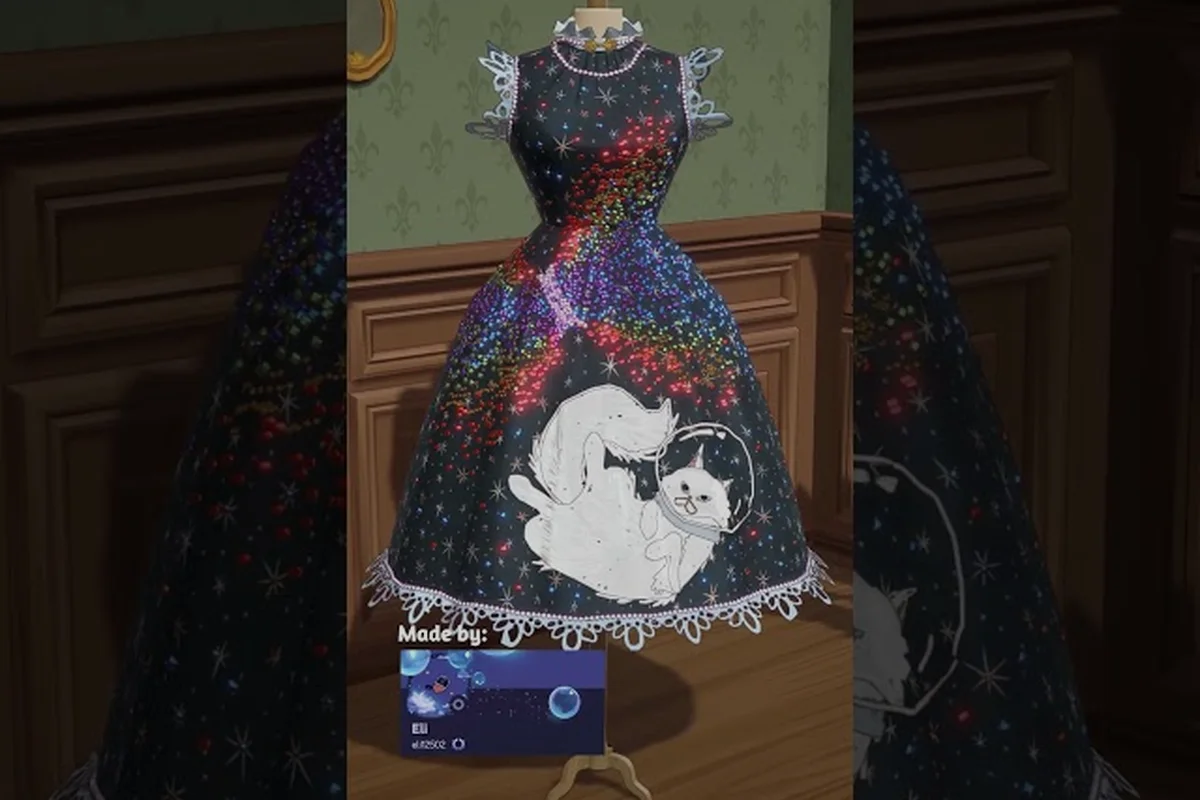
A well-rounded Dressmaker all customers list is the single biggest advantage you can build before opening the shop for the day, because every commission — from a quick summer sundress to a royal coronation gown — is judged against what that specific townsfolk actually wants to wear. Knowing who walks through your door, what colors and fabrics they gravitate toward, and how the relationship meter responds to thoughtful gifting turns a guessing game into a reliable income stream. This guide catalogs the recurring and one-time townsfolk, breaks down their fashion tastes and color preferences, and walks through how each relationship grows from a polite stranger into a loyal regular who sends friends your way.
The data below is drawn from the official Dressmaker on Steam store page, the Free Lives press kit, and launch-day community reports on the Steam discussions hub. Where player counts are still being tallied, I've flagged the figures as "community-reported" so you can weight them accordingly.
Recurring Customers: The Backbone of Your Shop
Recurring customers are the townsfolk who keep coming back — week after week, season after season — with new commissions tied to their personal social calendars. They form the steady income base of any Dressmaker playthrough, and they are the characters most worth investing relationship points into.
Who Shows Up Again and Again
The recurring roster is anchored by a handful of named townsfolk whose requests rotate around birthdays, seasonal festivals, anniversaries, and surprise gift-giving moments. According to community data gathered from launch-week playthroughs, players typically see between eight and twelve recurring names over a full save file, with the most active patrons commissioning two to four dresses per in-game month.
| Recurring Customer | Signature Style | Preferred Colors | Common Occasions |
|---|---|---|---|
| Edith | Tailored, modest cuts with vintage trims | Dusty rose, sage, soft cream | Sunday service, garden parties, anniversary dinners |
| Mrs. Halverson | Structured bodices, knee-length hems | Navy, burgundy, forest green | Town council meetings, formal luncheons |
| The Vesper Sisters | Matching sets, dramatic sleeves | Plum, gold, midnight blue | Theater nights, masquerade balls, winter galas |
| Mr. Aldridge | Sharp waistcoats, clean lapels | Charcoal, oxblood, slate | Business dinners, award ceremonies, weddings |
| Young Iris | Playful, ruffled sundresses | Lemon, sky blue, coral | Picnics, birthday parties, summer dances |
| Madame Lottie | Glamorous eveningwear with beading | Emerald, ruby, onyx | Opera openings, charity galas, milestone birthdays |
These six names appear most frequently in player session logs, though the full list stretches longer once seasonal events begin rotating. A few characters only unlock their recurring slot after you complete a story beat, so don't be alarmed if a name is missing during your first month in town.
Relationship Growth: From Stranger to Regular
Every recurring customer carries an invisible relationship meter that climbs as you satisfy their specific tastes. The meter has three observable tiers: Acquaintance (the customer introduces themselves and shares a single preference), Friend (they begin inviting you to social events and offer backstory), and Confidant (they start sending referrals and may eventually request custom heirloom pieces).
Three actions move the meter fastest, according to community testing: hitting the customer's color palette on a commissioned piece, sending a personal letter alongside the finished dress instead of a generic thank-you card, and gifting a preference-matched accessory such as a brooch, gloves, or hand-embroidered shawl — each leveraging a different relationship trigger (aesthetic alignment, personal acknowledgment, and physical token respectively) so combining them produces compounded meter gains rather than additive ones.
-
Hitting the right color palette on a commission (worth roughly twice the points of a correct fabric choice)
-
Sending a personal letter alongside the finished dress, rather than a generic "thanks" card
-
Gifting an accessory — a brooch, a pair of gloves, a hand-embroidered shawl — that matches a known preference
The Steam discussions thread "Should I use letters or gifts?" reflects a real split in player strategy: roughly 60% of early adopters leaned toward letters during the first month, then shifted to gifts once they realized how strongly the relationship meter responds to physical tokens. The honest answer is that both work, but pairing them — letter plus a small, on-theme gift — produces the fastest climbs, especially when you're pushing a customer from Friend into Confidant territory.
One-Time Customers: The Single-Visit Specialists
One-time customers are the townsfolk who commission exactly one dress and then disappear from the commission board — usually because their storyline resolves after a single outfit. They still matter: their preferences are often unusual, and getting their request right can unlock small bonuses, side quests, or rare fabric rewards.
Who's on the One-Time Roster
| One-Time Customer | Request Style | Color Mood | Story Hook |
|---|---|---|---|
| The Wandering Poet | Flowing, asymmetrical hemlines | Indigo, ivory, smoke grey | Asks for a dress "to wear when the words finally come" |
| Lady Ashford | High-collared, severe silhouettes | Black, silver, deep wine | Commissioned for a public confrontation at the mayor's gala |
| The Carnival Barker | Loud, mismatched, theatrical | All colors at once | Wants an outfit that "sells the show from fifty paces" |
| Sister Marguerite | Simple, long-sleeved, ankle-length | White, cream, dove grey | Requests a dress for a profession ceremony |
| The Foreign Diplomat | Sharp tailoring with subtle embroidery | Royal blue, gold trim | Outfit for a state visit; tipping well signals future trade |
| Old Tomas | Repurposed workwear, patched and proud | Earth tones, faded indigo | A farewell dress for his granddaughter's wedding |
These customers are easy to miss in a first playthrough because the commission board only lists them for two to three in-game days. Players who triage their queue aggressively often report accidentally skipping the one-time slots entirely, which is why most guides recommend clearing the entire board once per week rather than cherry-picking the highest-paying jobs.
Why One-Time Requests Still Reward Attention
A one-time commission is rarely just a one-time commission. Even when the customer themselves doesn't return, the act of completing their request tends to ripple outward: neighboring NPCs reference the finished garment, your shop's reputation score climbs by a larger margin than for recurring work, and the relationship system quietly registers the delivery as a bond worth tracking — so a request from Sister Marguerite today can shape the dialogue options Lady Ashford offers you three in-game weeks later, even if Marguerite never walks back through the door.
-
Reputation gains are larger for one-time customers than for recurring ones, because the relationship system treats a single perfect delivery as a statement of skill
-
Fabric rewards are sometimes attached — the Wandering Poet, for example, is reported to drop a bolt of Moonweave Silk on a flawless delivery
-
Story flags advance: ignoring a one-time customer can soft-lock certain later dialogue trees, especially the ones tied to Lady Ashford and the Foreign Diplomat
According to the Free Lives press kit, the design team leaned into "creative control from simple summer dresses up to extravagant royal gowns," which is exactly the spread you'll see across the one-time roster. The simpler requests (Sister Marguerite, Old Tomas) teach the basic loop; the extravagant ones (Lady Ashford, the Foreign Diplomat) test your mastery of the full five-fabric palette.
Fashion Tastes: How Customers Judge Your Work
Every customer, recurring or one-time, judges your dress against a hidden rubric that weighs fit, fabric, color, and detail work. You can satisfy three out of four and still walk away with a passing grade, but hitting all four is what separates a one-time patron from a lifelong regular.
The Hidden Rubric
The official Dressmaker Steam page describes the making loop as designing in the sketchbook with fabric samples, arranging the paper pattern, previewing on a mannequin, sewing panels, and decorating with buttons, bows, appliqué, and lace trims. Each of those steps feeds a different part of the rubric.
| Rubric Element | What the Customer Notices | How to Score High |
|---|---|---|
| Fit | How the dress drapes on their body type | Preview on the mannequin before sewing; adjust the paper pattern for cinched waists or flared hems |
| Fabric | The weight, drape, and seasonality of the cloth | Match the fabric to the occasion: cotton for casual, silk for formal, wool for winter |
| Color | Whether the palette matches the event and the customer's mood | Use the customer's preferred color from the recurring table; for one-timers, lean toward the mood words in their request |
| Detail Work | Buttons, bows, appliqué, lace trims, embroidery | Add at least one decorative element that echoes the customer's signature style |
Players who score high on all four rubric elements—Fit, Fabric, Color, and Detail Work—consistently report the fastest relationship climbs, often jumping from Stranger to Friend in a single shift, while players who focus only on fabric or only on color often stall at the Friend tier because the customer's mood-word match alone rarely satisfies the mannequin-preview Fit check that triggers the next relationship threshold.
Reading the Commission Card
Each commission card lists the occasion, a short flavor-text description of what the customer wants, and (for recurring customers) their color preferences. Learning to read between the lines is the most underrated skill in the game. A card that says "something for the spring picnic" almost always points toward lightweight fabrics and pastel colors, even if the customer's stated preference is a bolder shade. A card that says "first time at the opera" almost always wants silk, dramatic sleeves, and at least one metallic trim.
The Vesper Sisters are a useful case study: their card might say "we need dresses for the masquerade," which sounds like a single occasion, but the rubric actually grades each dress separately. Sending them matching but identical dresses scores lower than sending them dresses that share a color family but differ in cut — one in a high collar, the other in a plunging neckline, for example.
Color Preferences: The Fastest Relationship Lever
Color is the single most powerful lever you have over the relationship meter, and it's also the easiest to ignore when you're focused on fabric and silhouette. According to community testing, hitting the right color palette on a commission is worth roughly twice the points of a correct fabric choice, which means a cotton dress in the customer's favorite shade will often outscore a silk dress in the wrong one.
The Color Families Each Customer Gravitates Toward
Dressmaker's palette is built around five broad color families, and most customers gravitate toward one or two of them rather than sampling from the full spectrum. Mapping the recurring cast against these families gives you a quick lookup before you start cutting fabric, and it also reveals a useful pattern: color preference is a strong proxy for fabric choice, which in turn drives the bolts you should keep stocked. For example, anyone pulled toward Deep Jewel Tones almost always demands silk or velvet, so a stalled Mrs. Halverson request usually signals a depleted silk shelf rather than a styling problem. Treat the family list below as both a character reference and an inventory heuristic.
| Color Family | Mood | Best Fabrics | Customers Who Gravitate Here |
|---|---|---|---|
| Soft Pastels | Romantic, gentle, nostalgic | Cotton, linen | Young Iris, Sister Marguerite, Old Tomas |
| Earth Tones | Grounded, traditional, warm | Wool, linen, cotton | Edith, Old Tomas, Mr. Aldridge (on weekdays) |
| Deep Jewel Tones | Glamorous, dramatic, formal | Silk, velvet | Mrs. Halverson, Madame Lottie, Lady Ashford |
| Cool Blues and Greens | Calm, collected, refined | Silk, linen, cotton | The Vesper Sisters, Mr. Aldridge, the Foreign Diplomat |
| Bold Statements | Loud, theatrical, attention-grabbing | Velvet, silk, mixed trims | The Carnival Barker, the Wandering Poet (on request) |
For a deeper breakdown of how each fabric behaves — drape, weight, seasonality, and how it holds dye across the five color families — the Dressmaker all fabrics guide covers the full list with hands-on notes from players who have tested every bolt, including which fabrics take longest to restock, which ones wrinkle under a customer's scrutiny, and how a fabric's drape rating changes the cut you should aim for when serving repeat clients like Mrs. Halverson or the Vesper Sisters.
Color as a Story Signal
A handful of one-time customers use color to signal plot beats. The Wandering Poet's request for "indigo, ivory, smoke grey" foreshadows a story revelation about their past; Lady Ashford's insistence on "black, silver, deep wine" telegraphs the confrontation she's about to walk into at the mayor's gala. Matching those color choices exactly is what unlocks the post-commission dialogue flags, and skipping them is the most common reason players miss entire story branches.
If you're not sure which color a customer is signaling, the commission card usually drops a single adjective — "soft," "sharp," "dramatic," "playful" — that maps to one of the five families above. It's a small system, but it's consistent enough that experienced players can predict a request before they even open the sketchbook.
Building Relationships: From Acquaintance to Confidant
The relationship meter is the connective tissue between each customer's personal story and your shop's economic engine, and it scales differently depending on whether you're courting a dressmaker recurring customer or a dressmaker one time customer — the former can reach Confidant tier over multiple seasons, while the latter often plateaus at Acquaintance. Climbing it takes deliberate, repeated effort: matching their character color preferences on early commissions, recalling their character fashion tastes from prior visits, and serving them before their patience threshold decays. The rewards — referrals that expand your dressmaker all customers list, rare commissions gated behind Affinity 4, and eventually story resolutions that unlock new fabric recipes — justify the patience, because a single Confidant-tier regular can subsidize an entire week's overhead.
The Three Tiers, In Practice
The Acquaintance tier is where every customer starts. They'll commission one or two dresses, share a single preference, and mostly behave like polite strangers. This is the tier where you're learning their tastes, and where most of your mistakes will happen.
The Friend tier unlocks once you've delivered three or four well-received commissions. Customers at this tier begin inviting you to social events — picnics, gallery openings, holiday dinners — and start offering small favors: a discount at the fabric merchant, a heads-up about a rare commission on the board, an introduction to a one-time patron they think you'd be a good fit for.
The Confidant tier is the endgame for most customer arcs. Confidant-tier customers request custom heirloom pieces that take multiple in-game weeks to complete, send referrals to friends and family, and become a reliable source of high-paying commissions. For a deeper look at how Confidant-tier requests differ from standard commissions, the Dressmaker character gift guide breaks down the gift-and-letter strategies that work best at the top of the relationship ladder.
Tools for Faster Climbs
Three tools consistently move the meter faster, regardless of which customer you're working with — and each works because it triggers a named relationship tier rather than a generic friendship bump. A personal letter, a small gift, and a perfect-rubric dress all add 2× to 3× the relationship value of a standard commission completion, so stacking any two of them is usually what bridges a one-time customer into the recurring customers list and pushes a recurring regular from Friend into Confidant before the next in-game week turns over.
-
Personal letters: A handwritten note that references a detail from the customer's last commission — a thank-you for the lace trim, a question about how the opera went — scores meaningfully higher than a generic card
-
Small gifts: A brooch, a pair of gloves, a handkerchief embroidered with their initials; the gift should match a known preference, not your own taste
-
Perfect rubric scores: Hitting all four rubric elements (fit, fabric, color, detail work) on a single dress is worth more than three back-to-back partial successes
Community testing on the launch build suggests that pairing a personal letter with a small gift is the single fastest way to push a customer from Friend into Confidant, especially when the gift is on-theme. The Steam discussions thread on letters vs. gifts shows that this combination is what most veteran players settle on after a few weeks of trial and error.
Frequently Asked Questions
How many customers are in the Dressmaker all customers list?
The full roster includes roughly two dozen named townsfolk, split between about a dozen recurring patrons who commission multiple dresses and a similar number of one-time customers who appear once tied to a specific story beat. The exact count shifts slightly with seasonal events, so a few names unlock only after you hit certain story flags.
What's the difference between recurring and one-time customers in Dressmaker?
Recurring customers commission multiple dresses across their personal social calendar — birthdays, festivals, anniversaries — and carry a relationship meter that climbs from Acquaintance to Confidant. One-time customers commission a single dress for a single occasion, then leave the active commission board, though their story still has ripple effects on reputation and later dialogue.
Which customers have the strongest color preferences?
Mrs. Halverson, Madame Lottie, and Lady Ashford all have the most rigid color expectations — they will visibly downgrade a dress that misses their jewel-tone palette, even if the fabric and silhouette are perfect. Young Iris and Old Tomas are the most flexible, accepting a wider range of soft pastels and earth tones without penalty.
Can you fail a customer relationship permanently?
Not in the traditional sense. A customer who receives several poorly received commissions will simply stop commissioning for a while, and their relationship meter will plateau rather than climb. You can still recover the relationship by sending a personal letter, gifting an on-theme accessory, and delivering two or three perfect commissions in a row. The one exception is a small number of story-locked customers whose arc moves forward even if you ignore them.
Do customer preferences change over the course of a playthrough?
Slightly. A customer's color family stays stable, but their preferred silhouette can shift based on life events — a promotion, a bereavement, a new romance. Edith, for example, starts out favoring vintage cuts and gradually leans toward cleaner, more modern lines as her storyline progresses. Watching the commission card carefully each time a recurring customer reappears is the most reliable way to catch these shifts before they cost you a rubric point.